Artificial light
Artificial light: new light-based sculpture and installation art: Jennifer Allora and Guillermo Calzadilla, Spencer Finch, Ceal Floyer, Ivan Navarro, Nathaniel Rackowe, Douglas Ross
Elana Herzog... [et al.]; curated by Sabine Russ and Gregory Volk
Publisher: Richmond, Va. : VCUarts Anderson Gallery, c2006.
ISBN: 0935519289
Jennifer Allora and Guillermo Calzadilla, In Growth (Survival), 2006, mixed media
Iván Navarro uses fluorescent tubes and electrical materials to create sculptural works that offer social and political commentary within an art historical context. In his works, Navarro appropriates the formal qualities of Minimalism and other avant-garde movements, such as geometric abstraction and constructivism, to speak about violence, energy and the media.
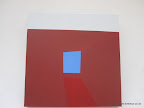
Spencer Finch "White (Niagara Falls Obscured by Mist) 2006". Lightbox and filters. This piece re-creates the light at a moment when the falls was obscured by its own mist.
p.68 "Bob Irwin was using light to dematerialise objects, to make them less solid; I was trying to materialise light as object" James Turrell.
Light
Lighthouse
Traffic light
Brake Light
Street Light
Reading Light
Stage Light
Torch
Candle
Airport lights
Airplane lights - horizontal rain
light coming in under the door of the bathroom
Advertising
Martin Creed - Turner
Bruce Nauman (Richard Serra!)
Leger - Theatre lights flashing
Hell(o) (T)here
Lots of artists use words in lights
light at the end of the tunnel
Light reflected on the back of a van as you go through a tunnel
Fireworks
Fire
Ambulance / Fire / Police
Julien Gardiner
Traffic light
Brake Light
Street Light
Reading Light
Stage Light
Torch
Candle
Airport lights
Airplane lights - horizontal rain
light coming in under the door of the bathroom
Advertising
Martin Creed - Turner
Bruce Nauman (Richard Serra!)
Leger - Theatre lights flashing
Hell(o) (T)here
Lots of artists use words in lights
light at the end of the tunnel
Light reflected on the back of a van as you go through a tunnel
Fireworks
Fire
Ambulance / Fire / Police
Julien Gardiner
James Turrell
James Turrell
James Turrell: The Wolfsburg Project
Markus Bruderlin, Richard Andrews, Annelie Lutgens, James Turrell,
Publisher: Hatje Cantz
ISBN: 3775724559 DDC: 709 Edition: Hardcover; 2010-03-31
p.67 "Light is a charged substance what we have a primary connection with. Situations in which you notice the presence of such a charged substance are fragile. I mold it... so that you can feel the presence of the light in the room."
p.80 "First of all I am not dealing with an object. The object is perception itself. Secondly, I am not dealing with an image., because I want to avoid any associative symbolic thought. Thirdly, I am not dealing with a special purpose or focal point, either. With no object, image or purpose, what are you looking at? You are looking at yourself looking."
p. 155 "My work is about space and the light that inhabits it. It is about how you confront that space and plumb it. It is about your seeing. How you come to it is important. The qualities of the space must be seen, and the architecture of the form must not be dominant. I am really interested in the qualities of one space sensing another. It is like looking at someone looking. Objectivity is gained by being once removed. As you plumb a space with vision, it is possible to "see yourself see". This seeing, this plumbing, imbues space with consciousness. by how you decide to see it and where you are in relation to it, you create its reality. The piece can change as you move to it or within it. It can also change as the light source that enters it changes." Turrell in conversation with Julia brown, 1985.
James Turrell: The Wolfsburg Project
Markus Bruderlin, Richard Andrews, Annelie Lutgens, James Turrell,
Publisher: Hatje Cantz
ISBN: 3775724559 DDC: 709 Edition: Hardcover; 2010-03-31
p.67 "Light is a charged substance what we have a primary connection with. Situations in which you notice the presence of such a charged substance are fragile. I mold it... so that you can feel the presence of the light in the room."
p.80 "First of all I am not dealing with an object. The object is perception itself. Secondly, I am not dealing with an image., because I want to avoid any associative symbolic thought. Thirdly, I am not dealing with a special purpose or focal point, either. With no object, image or purpose, what are you looking at? You are looking at yourself looking."
p. 155 "My work is about space and the light that inhabits it. It is about how you confront that space and plumb it. It is about your seeing. How you come to it is important. The qualities of the space must be seen, and the architecture of the form must not be dominant. I am really interested in the qualities of one space sensing another. It is like looking at someone looking. Objectivity is gained by being once removed. As you plumb a space with vision, it is possible to "see yourself see". This seeing, this plumbing, imbues space with consciousness. by how you decide to see it and where you are in relation to it, you create its reality. The piece can change as you move to it or within it. It can also change as the light source that enters it changes." Turrell in conversation with Julia brown, 1985.
James Turrell
James Turrell
Zug Zuoz
By (author) Matthias Haldemann, Edited by Kunsthaus Zug
ISBN 9783775726023
p.28 "Light is a sculptural material for Turrell and he it physically palpable, like sound. Precise, but inconspicuous structural devices are designed to create this impression. The circular opening of ""Skyspace Piz Uter" 2005 Zuoz, Germany
has a sharp bevelled edge that reinforces the impression of flatness. And, as far as Turrell is concerned, a round space is better suited to the realm of perception than a rectangular one anyway. Moreover, the intensity and brightness of the white in the upper part of the room not only make the sky seem flatter than it really is, but also make its colours deeper and darker, outside the intense, luminous ultramarine is but a pale grayish blue. The same is evidently not the same and we cannot trust our own eyes: they see more than is actually there."
Zug Zuoz
By (author) Matthias Haldemann, Edited by Kunsthaus Zug
ISBN 9783775726023
p.28 "Light is a sculptural material for Turrell and he it physically palpable, like sound. Precise, but inconspicuous structural devices are designed to create this impression. The circular opening of ""Skyspace Piz Uter" 2005 Zuoz, Germany
has a sharp bevelled edge that reinforces the impression of flatness. And, as far as Turrell is concerned, a round space is better suited to the realm of perception than a rectangular one anyway. Moreover, the intensity and brightness of the white in the upper part of the room not only make the sky seem flatter than it really is, but also make its colours deeper and darker, outside the intense, luminous ultramarine is but a pale grayish blue. The same is evidently not the same and we cannot trust our own eyes: they see more than is actually there."
Science
"Uncertainty is a place people can think."
Lisa Randall, author "Knocking on Heaven's Door"
The Daily Show,
Lisa Randall, author "Knocking on Heaven's Door"
The Daily Show,
Day 29
I woke up this morning and it's raining. I have had it in the back of my mind that it might rain tomorrow. But now it's at the front of my mind. The weather forecast isn't too bad, and I think we'll be ok. IN the end I didn't actually do the "final preparations" that I was planning to, but I was "sent" a helper for tomorrow. So I'm very excited about how the day will turn out. And it rained so much that there can't be any more water in the sky!
Day 28
I decided to do a little more "publicity" on Facebook, with a Poll.
At the studio I have printed the contact details on the reverse of the feuilletons, sprayed some frames with another coat of orange, made the "A Passage for Walter Benjamin" guest book, with a rather nifty piece of creativity to keep the book from flying away (see pics), and added some contact details to a box to hold the feuilletons, including a QR code for those people with Smartphones.
I will be keeping back three feuilltons, Editions 14, 15 and 24. These are for archiving, sending to OCA, and one for the WB centre in PortBou, which I will send after the event.
At the studio I have printed the contact details on the reverse of the feuilletons, sprayed some frames with another coat of orange, made the "A Passage for Walter Benjamin" guest book, with a rather nifty piece of creativity to keep the book from flying away (see pics), and added some contact details to a box to hold the feuilletons, including a QR code for those people with Smartphones.
I will be keeping back three feuilltons, Editions 14, 15 and 24. These are for archiving, sending to OCA, and one for the WB centre in PortBou, which I will send after the event.
| From Breaking Boundaries |
| From Breaking Boundaries |
Day 27
Today I photocopied the "wrappers" that will go around the feuilletons. I went on an art gallery crawl, as there were around 15-20 galleries holding an opening this evening.
Day 26
Today I re-folded all the feuilletons into their correct orders, and printed the title and edition numbers, as well as signing them all. I've just realised I haven't dated them - so I'll print the date of the event onto them on Friday, when I also add the contact details on the back page.
I was also trying to work out if I could manage to put everything I need on my moto, so that I don't need to borrow anyone's car. I can't; but i realsied that it will all fit in a large suitcase, so I can use public transport instead. I realised that I prefer the idea of independence to relying on other people.
Finally, I've written a list of all the things I need to do or buy before Sunday. It's not very long, and everything will be done by Friday night!
| From Breaking Boundaries |
| From Breaking Boundaries |
I was also trying to work out if I could manage to put everything I need on my moto, so that I don't need to borrow anyone's car. I can't; but i realsied that it will all fit in a large suitcase, so I can use public transport instead. I realised that I prefer the idea of independence to relying on other people.
Finally, I've written a list of all the things I need to do or buy before Sunday. It's not very long, and everything will be done by Friday night!
Day 24
I've made a map for the route of the event "A Passage for Walter Benjamin"
Map for "A Passage for Walter Benjamin"
View A Passage for Walter Benjamin in a larger map
I also completed another print shape on a WB line print:
Map for "A Passage for Walter Benjamin"
View A Passage for Walter Benjamin in a larger map
I also completed another print shape on a WB line print:
| From Breaking Boundaries |
Day 23
Today I have brought together all the quote I want for the wrapper of the feuilleton. It is these wrappers, used to help distribute the newspapers, that WB often used to make his notes of for the Arcades Project.
How Beautiful is the street!
Walter Bendix Schönflies Benjamin ( 15 July 1892 – 26 September 1940) was a German-Jewish intellectual, who functioned variously as a literary critic, philosopher, sociologist, translator, radio broadcaster and essayist.
Use the Feuilleton to guide you from the statue of Christopher Columbus to the Jardines de Walter Benjamin, where you will see some sculptures by the artist JD Holden (1965, Switzerland), made as a temporary memorial on the eve of Benjamin’s death in Port Bou, Spain.
In 1839 it was considered elegant to take a tortoise out walking.
This gives us an idea of the tempo of Flanerie in the arcades. [M3,8]
You are passing through a great city that has grown old in civilisation and your eyes are drawn upward, for in the public squares stand motionless figures, repeating to you the solemn legends of Glory, most heedless of men, the most unhappy or the vilest, a beggar or a banker; War, Science and Martyrdom. Some are pointing to the sky to which they aspired, others to the earth, from which they sprang. They brandish, or they contemplate, what was the passion of their life: a tool, a sword , a book, a torch. Even if you are the most heedless of men, this bronze phantom takes possession of you for a few minutes, and commands you, in the name of the past, to think of things which are not of the earth. Such is the divine role of sculpture. [J34,3]
Fees for feuilletons went as high as two francs per line. Authors would often write as
much dialogue as possible so as to benefit from the blank spaces in the lines. [U9,3]
An intoxication comes over the man who walks long and aimlessly through the streets. [M1,3]
The best way, while dreaming, to catch the afternoon in the net
of the evening is to make plans. The flaneur is planning. [M3a,2]
The Press brings into play an overabundance of information, which can
be all the more provocative the more it is exempt from any use. [M16a,1]
On the feuilleton: It was a matter of injecting experience - as it were, intravenously - with the poison of sensation; that is to say, highlighting within the ordinary experience the character of immediate experience. To this end, the experience of the big-city dweller presented itself. The feuilletonist turns this to account. He renders the city strange to its inhabitants. [m3,a2]
The student “never stops learning”; the gambler “never has enough”;
for the flaneur, “there is always something more to see.” [m5,1]
“Man as civilised being, as intellectual nomad, is again wholly microcosmic, wholly homeless,
as free intellectually as hunter and herdsman were free sensually.” [m5,6]
Rest assured that when Victor Hugo saw a beggar on the road, he saw him for what he is, for what he really is in reality: the ancient mendicant, the ancient friar that forbade ownership of property, subsisting mostly on alms, on the ancient road. [C5,1]
As long as there is still one beggar around, there will still be myth. [K6,4]
How Beautiful is the street!
Walter Bendix Schönflies Benjamin ( 15 July 1892 – 26 September 1940) was a German-Jewish intellectual, who functioned variously as a literary critic, philosopher, sociologist, translator, radio broadcaster and essayist.
Use the Feuilleton to guide you from the statue of Christopher Columbus to the Jardines de Walter Benjamin, where you will see some sculptures by the artist JD Holden (1965, Switzerland), made as a temporary memorial on the eve of Benjamin’s death in Port Bou, Spain.
In 1839 it was considered elegant to take a tortoise out walking.
This gives us an idea of the tempo of Flanerie in the arcades. [M3,8]
You are passing through a great city that has grown old in civilisation and your eyes are drawn upward, for in the public squares stand motionless figures, repeating to you the solemn legends of Glory, most heedless of men, the most unhappy or the vilest, a beggar or a banker; War, Science and Martyrdom. Some are pointing to the sky to which they aspired, others to the earth, from which they sprang. They brandish, or they contemplate, what was the passion of their life: a tool, a sword , a book, a torch. Even if you are the most heedless of men, this bronze phantom takes possession of you for a few minutes, and commands you, in the name of the past, to think of things which are not of the earth. Such is the divine role of sculpture. [J34,3]
Fees for feuilletons went as high as two francs per line. Authors would often write as
much dialogue as possible so as to benefit from the blank spaces in the lines. [U9,3]
An intoxication comes over the man who walks long and aimlessly through the streets. [M1,3]
The best way, while dreaming, to catch the afternoon in the net
of the evening is to make plans. The flaneur is planning. [M3a,2]
The Press brings into play an overabundance of information, which can
be all the more provocative the more it is exempt from any use. [M16a,1]
On the feuilleton: It was a matter of injecting experience - as it were, intravenously - with the poison of sensation; that is to say, highlighting within the ordinary experience the character of immediate experience. To this end, the experience of the big-city dweller presented itself. The feuilletonist turns this to account. He renders the city strange to its inhabitants. [m3,a2]
The student “never stops learning”; the gambler “never has enough”;
for the flaneur, “there is always something more to see.” [m5,1]
“Man as civilised being, as intellectual nomad, is again wholly microcosmic, wholly homeless,
as free intellectually as hunter and herdsman were free sensually.” [m5,6]
Rest assured that when Victor Hugo saw a beggar on the road, he saw him for what he is, for what he really is in reality: the ancient mendicant, the ancient friar that forbade ownership of property, subsisting mostly on alms, on the ancient road. [C5,1]
As long as there is still one beggar around, there will still be myth. [K6,4]
Days 19, 20, 21, 22
I've had some other priorities this week, including a meeting about a space for a large scale Abstract Heads exhibition next February, and another meeting about starting my Catalogue Raisonné. However, I have at last got a copy of "Arcades Project" by Walter Benjamin (Amazon), a rather fantastic (and huge) volume of notes Benjamin was working on for over a decade before he died. It's full of quotes which will give a certain depth to "A Passage for Walter Benjamin". These quotes will be on the wrapper of the feuilleton.
I've nearly finished these "newspapers". Felipe (a carpenter at the studio) said that they are full of information, which shows that they do work. When I showed them to Núria (the student who may do my Catalogue Raisonné) she took quite a while to figure them out, but got there in the end, identifying first the paving stones, then the AH Walter Benjamin outlines, and finally the embossed manhole covers. I am sure that people who come to the event will do things in a different way, as there will be more visual clues en route.
Also, through the Facebook Event Invitation, I have discovered that there is a conference in Port Bou on the same weekend that my event will take place. http://walterbenjaminportbou.cat/en . This is organised by an association called "Walter Benjamin in Port Bou" and I will be sending them an archive of "A Passage for Walter Benjamin", and I hope that I will be able to archive one of the feuilleton with them.
Here are the prints I have completed these four days:
I've nearly finished these "newspapers". Felipe (a carpenter at the studio) said that they are full of information, which shows that they do work. When I showed them to Núria (the student who may do my Catalogue Raisonné) she took quite a while to figure them out, but got there in the end, identifying first the paving stones, then the AH Walter Benjamin outlines, and finally the embossed manhole covers. I am sure that people who come to the event will do things in a different way, as there will be more visual clues en route.
Also, through the Facebook Event Invitation, I have discovered that there is a conference in Port Bou on the same weekend that my event will take place. http://walterbenjaminportbou.cat/en . This is organised by an association called "Walter Benjamin in Port Bou" and I will be sending them an archive of "A Passage for Walter Benjamin", and I hope that I will be able to archive one of the feuilleton with them.
Here are the prints I have completed these four days:
| From Breaking Boundaries |
| From Breaking Boundaries |
| From Breaking Boundaries |
| From Breaking Boundaries |
| From Breaking Boundaries |
| From Breaking Boundaries |
| From Breaking Boundaries |
| From Breaking Boundaries |
| From Breaking Boundaries |
| From Breaking Boundaries |
Day 18
A fabulous session in the studio, with three prints done; the arrow of the compass, and two paving slabs (probably smaller than you think!!) I
| From Breaking Boundaries |
| From Breaking Boundaries |
| From Breaking Boundaries |
| From Breaking Boundaries |
Day 17
Today I did the final AH woodcut, in black, and then made the woodcuts for the compass point motif. This will be in black and orange.This motif is to remind the audience that this work is about travelling, moving, direction, as well as looking. I´ve also dug out the remaining pavement tiles to add to the existing blue and orange ones which were the first prints done on the feuilleton. Originally I had planned to use bits of broken brick and rubble as used in the "Groundworks" series, but I feel it will be better to focus more clearly on the ground, and also the Groundworks series willl be donated to "PapergirlBCN" in November.
Day 16
In terms of the Breaking the Boundaries task today was about getting the orange AH woodcut done and then I also created a spray stencil with the dates of WB. I had to do a couple of attempts at this. The first idea was to use cut-outs of the letters and make a "reverse image" stencil, as I have with "NOTEVERYTHINGYOUSEEISART". This didn´t really work, so I then did a more traditional stencil. I used a cream paint for this part, to distinguish it from the black, blue and orange or the main imprints, but not to give it too much prominence.
Day 15
This was my second day of printing, and I completed the blue WB AH woodcut. It's looking quite impressive, thought the strength of the line is a bit hit and miss. It would be good to get more pressure on the paper, but I am concerned that if I do that, the embossing will disappear a bit. So for now I will continue just pressing by hand. I also worked out that I need to keep the papers in sets of three, or else I would get mighty confused about which print I have made for which feuilleton. So now I take a sheet out of the feuilleton, print it and put it on the top of the pile to dry. This means that I can only really do one print a day, which is frustrating, but I just don't have the space to do any more anyway.
| From Breaking Boundaries |
| From Breaking Boundaries |
| From Breaking Boundaries |
Day 14
Today I scribbled some thoughts about the transcendence of intervention as art.
The Passage to Walter Benjamin intervention has a trqansitory nature, but in a way all works of art are transitory. It's just that we can own some, but even these we look at fleetingly once a day, or worse, put them in our storage space. So it all ends up the same - we have a memory of something the may, or may not, remain as important in our lives. I've seen Dali's "Christ of St. John of the Cross" in Glasgow, and Carl Andre's "Flanders Fields" in Grenoble exactly once each. And for no more than say 5 minutes. But the feeling I had then is etched on my mind, in my memory. So the transitory nature of this event is just fine with me.
I've also managed to print the first couple of bits onto the 34 feuilleton that I will create:
| From Breaking Boundaries |
Day 13
I woke up this morning wondering if the word "passage" in Spanish (pasage) has the same double meaning it does in English. It does. So there will now be a "guestbook" for people to write or draw their thoughts about the event. This will be made from the same paper I am using for the feuilleton.
I've also just sewn the corners of a folded towel together for use in the embossing stage of the feuilleton creation process.
Eleanor and James have both made comments about a "poster" that I made (with some help from Amelia) for the event. Eleanor said "Jonathan I would say to cut out alot of the writing - the background information is really for extra reading for those who turn up in my view.
I would just have one of the extra passages of information or quotes - something to whet the appetite and intrigue.
So what it is, where, and so on - but above all - an image.
I think each project needs a signature image associated with it - something that somehow sums up what it is about - the same image you would send to a paper if they wanted one picture, or almost like a brand or logo. People remember an image.
In the poster there is no indication as yet as to what it is - it doesn't say art or scultpture exhibition or event - it could be a reading or theatrical performance or anything.
Something like "sculpture event" would make people turn up to see more.
Wish I could come and see." To which I replied: "Eleanor.... thanks for all of that.... and you are absolutely right about the image... normally.... I actually wanted the words of Walter Benjamin to conjure an image.... and so I'm going to leave it be.
However, on the facebook page, there is more....."
James said "I agree with you on this Eleanor, definitely less quotes and a good strong image.
In theory I may not to turn up to the event either because i don't know what it is!"
I suppose I want to question whether I WANT people to fully know what is going to happen, what they will see. This is an ART intervention, not theatre or a magic show. Through the publicity I am trying to get people who know something of Walter Benjamin, or who might be intrigued by the philosophical angle. There will of course be the feuilleton to give to passers-by, which should at least intrigue and direct a little. And I am planning a "breadcrumb" appoach to the publicity by putting teasers on the facebook event page.
I've also just got back froma very tiring day embossing 100 sheets of paper for the feuilleton. It has been a hot old day, but I only had one problem - when my water spray broke. Fortunately I had the moto, so I just packed up, went to by another one, and then got straight back to work. Surprisingly few people even took notice of me. I got a few strange glances, but only one person actually asked me what I was doing. It was a little bizarre, as I had just been concentrating on spraying water on the paper, and when I stood up there was a group of about 30 Germans, all standing round looking at me! So I tried to explain what I was doing, but she kind of lost interest when she realised that it was for an event in a couple of weeks' time.
Here are a few pics of me working on the embossing:
I've also just sewn the corners of a folded towel together for use in the embossing stage of the feuilleton creation process.
Eleanor and James have both made comments about a "poster" that I made (with some help from Amelia) for the event. Eleanor said "Jonathan I would say to cut out alot of the writing - the background information is really for extra reading for those who turn up in my view.
I would just have one of the extra passages of information or quotes - something to whet the appetite and intrigue.
So what it is, where, and so on - but above all - an image.
I think each project needs a signature image associated with it - something that somehow sums up what it is about - the same image you would send to a paper if they wanted one picture, or almost like a brand or logo. People remember an image.
In the poster there is no indication as yet as to what it is - it doesn't say art or scultpture exhibition or event - it could be a reading or theatrical performance or anything.
Something like "sculpture event" would make people turn up to see more.
Wish I could come and see." To which I replied: "Eleanor.... thanks for all of that.... and you are absolutely right about the image... normally.... I actually wanted the words of Walter Benjamin to conjure an image.... and so I'm going to leave it be.
However, on the facebook page, there is more....."
James said "I agree with you on this Eleanor, definitely less quotes and a good strong image.
In theory I may not to turn up to the event either because i don't know what it is!"
I suppose I want to question whether I WANT people to fully know what is going to happen, what they will see. This is an ART intervention, not theatre or a magic show. Through the publicity I am trying to get people who know something of Walter Benjamin, or who might be intrigued by the philosophical angle. There will of course be the feuilleton to give to passers-by, which should at least intrigue and direct a little. And I am planning a "breadcrumb" appoach to the publicity by putting teasers on the facebook event page.
I've also just got back froma very tiring day embossing 100 sheets of paper for the feuilleton. It has been a hot old day, but I only had one problem - when my water spray broke. Fortunately I had the moto, so I just packed up, went to by another one, and then got straight back to work. Surprisingly few people even took notice of me. I got a few strange glances, but only one person actually asked me what I was doing. It was a little bizarre, as I had just been concentrating on spraying water on the paper, and when I stood up there was a group of about 30 Germans, all standing round looking at me! So I tried to explain what I was doing, but she kind of lost interest when she realised that it was for an event in a couple of weeks' time.
Here are a few pics of me working on the embossing:
| From Breaking Boundaries |
| From Breaking Boundaries |
| From Breaking Boundaries |
| From Breaking Boundaries |
| From Breaking Boundaries |
| From Breaking Boundaries |
Day 12
Today I have made the invitation for Facebook, and put it on my webpage. https://www.facebook.com/event.php?eid=173292449413708 www.lonetour.co.uk
I've also been to the studio to complete chiselling the final AH WB for the Feuilleton and had a good clean and tidy up ready to start printing them. There are so many pages that I will be able to cover the floor several times over... so I'm not really sure how I am going to manage this task!
Day 10
Today I have started to make the box to fix to my motorbike so that I can fetch and carry 100 sheets of paper. It's going to take some fixing, but it'll work, be finished tomorrow, and then I can buy the paper, and get it embossed on the streets of Barcelona.
I've also been thinking about some publicity (which fits in well with the latest unit in the MFA) and will entirely be using social networking to get volunteers to work on the project, and for an audience to come and see the project.
Days 7, 8 and 9
So, I went away for the weekend. We happened to go to Port Bou, where Walter Benjamin died and where the Danny Caravan memorial to him is. But it was miserable and raining, so we went to France instead.
Day 5
Today I started to chisel out the final large (40x40cm) AH Walter Benjamin line woodcut for the feuilleton. This is the most intricate piece, but I have more experience now, and it's going quite well. I still need to find a way of "pressing" in the printing process; I really need a large and heavy roller of some kind. If only I had my Dad's old garden roller....
Day 4
Today I was able to try out the paper I am hoping to use for the Feuilleton. I embossed a couple of manhole covers, and tried printing a "woodblock line print" and some rubble. It turned out pretty well. The paper is thick enough to not tear when embossed, and holds the shape well, but also accepts the printing ink too. I also realised that I can do a "roller print" of the "blue" shapes from the AH WB on the outline shape. It's not very clear on the photos, but looks quite good in real life.
I also made a couple of small (10cm squared) woodcut blocks of AH Self-Portrait, which I felt would be a nice motif to use on the feuilleton.
Day 3
Another day of not much happening. I couldn't go to the studio as I had a puncture on my motobike, and an interview. I did go and see my friends Jess and Xavi at UntitledBCN, a local "vanity-gallery", to talk about their thoughts on trying to get permissions from the local council for this project, but they are on holiday! I've sent them a message on FB.
Day 2
Does anticipation count as an activity towards breaking the boundaries? Because apart from showing Susannah the sample piece of paper I have bought, I didn't do anything today apart from looking forward to getting the WB Arcades Project book. And it's not even going to be sent from Amazon until the 9th September.
Breaking the Boundaries: 4 weeks to go. Day 1
So far I have done quite a lot of planning, thinking and making for my BTB project, and I decided that it would be useful to work on it a bit more systematically. So every day from now until Sunday September 25th I'm going to blog a little about what I have achieved that day.
So far I have written a background for my project:
docs.google.com
This was mainly written in conjunction with James Kowzac (well.. I used a lot of the notes he wrote for me during our first online discussion.) and it needs academic referencing and some further explanation.
At the hairdresser's this afternoon I wrote a few notes:
It's amazing how a project can swing from brilliant to hopeless and back again. Deciding to carve the lines of the Walter Benjamin (WB) Abstract Heads (AH) was brilliant - but the result that I printed on 40cm x 40cm paper was really poor - and the strange shape of the work really off-putting. I wanted a newspaper shape, but thought that 40x40 would be more arty, but realise now that there is something fundamental about a "portrait" shape for a newspaper. I've been looking for a source of newsprint to make the feuilleton but getting nowhere fast. The language barrier is definitely one of the boundaries that need breaking here! Still it was suggested that I check out a couple of shops that sell paper, and I duly went along to Raiman. Here is discovered that they have all sorts of paper, including a very nice recycled sheet of 90cm x 64cm. Folded this gives me 64x45cm which is a very nice shape and size for an arty newspaper, though somewhat larger than the old Broadsheet papers. I'm hoping the photos of the audience opening the feuilleton will look fabulous with this size, and it gives me plenty of room to do an outline AH and then to put something at the bottom. So this might not be the 40x40 design I was thinking about after the Torres-Garcia exhibition (I'll need to get you up to speed on that later) but we'll see how it goes.
Along with the Feuilleton I am going to have a small (A4) piece of paper wrapped around the rolled up newspaper. This will serve two functions; it will recall the similar piece of paper wrapped around newspapers at the time WB was writing notes for his Arcades Project (and which he used to scribble notes on!), and it will enable me to print some "instructions" for the audience in different languages. (I like the idea of using Google Translate to do the Japanese and Chinese translations to provide a really bad translation, in the way that instruction manuals used to be).
In terms of reference material for this project so far I have:
Groundworks - my first attempt at embossing street ironmongery and printing with pieces of found paving and bricks.
AH WB (Canvas) This is a series 2 AH the three blue shapes of which informed the sclupture and feuilleton. 

From Abstract Head Experiments June 2011
AH WB (Sculpture)
Feuilleton
Outline Print
Frames
I also have a pile of old picture frames which I have painted black and blue. I need some to be orange, to keep the colour scheme in tact too. These are to be placed around the area of the WB Memorial Gardens to highlight some of the mundane but interesting sites, giving them the same importance as any other work of art.
Remains ( see film) [and I have just ordered a copy of "Arcades Project" by WB.
WB talked about playing in the rubble of a building site.... need to expand on this.
Finally, I feel that I might like to put some WB quotes on the Feuilleton, but this might detract from the "artwork" nature of it, and in any case, I'm not sure how I would physically print it on.
So far I have written a background for my project:
docs.google.com
This was mainly written in conjunction with James Kowzac (well.. I used a lot of the notes he wrote for me during our first online discussion.) and it needs academic referencing and some further explanation.
At the hairdresser's this afternoon I wrote a few notes:
It's amazing how a project can swing from brilliant to hopeless and back again. Deciding to carve the lines of the Walter Benjamin (WB) Abstract Heads (AH) was brilliant - but the result that I printed on 40cm x 40cm paper was really poor - and the strange shape of the work really off-putting. I wanted a newspaper shape, but thought that 40x40 would be more arty, but realise now that there is something fundamental about a "portrait" shape for a newspaper. I've been looking for a source of newsprint to make the feuilleton but getting nowhere fast. The language barrier is definitely one of the boundaries that need breaking here! Still it was suggested that I check out a couple of shops that sell paper, and I duly went along to Raiman. Here is discovered that they have all sorts of paper, including a very nice recycled sheet of 90cm x 64cm. Folded this gives me 64x45cm which is a very nice shape and size for an arty newspaper, though somewhat larger than the old Broadsheet papers. I'm hoping the photos of the audience opening the feuilleton will look fabulous with this size, and it gives me plenty of room to do an outline AH and then to put something at the bottom. So this might not be the 40x40 design I was thinking about after the Torres-Garcia exhibition (I'll need to get you up to speed on that later) but we'll see how it goes.
Along with the Feuilleton I am going to have a small (A4) piece of paper wrapped around the rolled up newspaper. This will serve two functions; it will recall the similar piece of paper wrapped around newspapers at the time WB was writing notes for his Arcades Project (and which he used to scribble notes on!), and it will enable me to print some "instructions" for the audience in different languages. (I like the idea of using Google Translate to do the Japanese and Chinese translations to provide a really bad translation, in the way that instruction manuals used to be).
In terms of reference material for this project so far I have:
Groundworks - my first attempt at embossing street ironmongery and printing with pieces of found paving and bricks.
| From Groundworks |
AH WB (Sculpture)
| From Abstract Head Experiments June 2011 |
Feuilleton
| From Abstract Head Experiments June 2011 |
Outline Print
| From Abstract Heads Experiments August 2011 |
Frames
I also have a pile of old picture frames which I have painted black and blue. I need some to be orange, to keep the colour scheme in tact too. These are to be placed around the area of the WB Memorial Gardens to highlight some of the mundane but interesting sites, giving them the same importance as any other work of art.
Remains ( see film) [and I have just ordered a copy of "Arcades Project" by WB.
WB talked about playing in the rubble of a building site.... need to expand on this.
Finally, I feel that I might like to put some WB quotes on the Feuilleton, but this might detract from the "artwork" nature of it, and in any case, I'm not sure how I would physically print it on.
Introducing Walter Benjamin
Howard Caygill, Andrzej Klimowski (Contributor)
Publisher: Totem Books
ISBN: 1874166870 DDC: 838.91209 Edition: Paperback; 1994-03-16
"All future is the past. The past of things is the future of the "I" time. But past things have futurity." p23
"A philosophy that does not include the possibility of soothsaying from coffee grounds...cannot be a true philosophy." p.40
Kant = pure reason. Hamann = "not only the entire capacity to think rests on langauge, but language is also the centre of the misunderstanding of reason itself."
BUT what about art!! reason without language!!
Angelus Novus - Klee
Haptic art = egyptian art and hollow relief this makes me think of Braille
Optic art = Greek are with foreshortening, shadows - but "depth" is still restricted
3D art - late roman art - "the space between bodies appears measurable, and although still organised in relation to a plane, the objects have no tactile connection to it. This is achieved by deep shadowing and the objects tend to blur into their environment."
so my question here is the position of the white cube. if art is in a white cube, it cannot blur into it´s environment. Caro puts his work into a field of green (grass, for example). see also the female artist talking about her little people sculptures in an opulent room, rather than a white cube.
p.75 "Graphic art is the art of the applied line. Painting is the art of the emergent line."
so series 2 of Abstract heads creates "emergent lines" between the individual forms on the individual canvasses
"The collector is the saviour of objects that might otherwise be lost." p.77
"The place where the word is most debased - the newspaper - becomes the very place where a rescue operation is mounted." p.131
"a halo of uniqueness and authenticity" p.135
"The unique phenomenon of distance no matter how close an object may be"
"To substitute a plurality of mechanically reproduced copies for the unique original must destroy the very basis for the reproduction of auratic works of art - that singularity in time and space on which they depend for their claim to authority and authenticity." p.137
do I believe that my works of art have authority? do they have an aura? should i give up now?????
The past witnesses of the present (the arcades of Paris)
"Photography which renders traditional painting obsolete will liberate the colour elements of cubism" p.155
"In the ruins of great buildings, the idea of the plan speaks more impressively than in lesser buildings, however well-preserved they are." p.165
Howard Caygill, Andrzej Klimowski (Contributor)
Publisher: Totem Books
ISBN: 1874166870 DDC: 838.91209 Edition: Paperback; 1994-03-16
"All future is the past. The past of things is the future of the "I" time. But past things have futurity." p23
"A philosophy that does not include the possibility of soothsaying from coffee grounds...cannot be a true philosophy." p.40
Kant = pure reason. Hamann = "not only the entire capacity to think rests on langauge, but language is also the centre of the misunderstanding of reason itself."
BUT what about art!! reason without language!!
Angelus Novus - Klee
Haptic art = egyptian art and hollow relief this makes me think of Braille
Optic art = Greek are with foreshortening, shadows - but "depth" is still restricted
3D art - late roman art - "the space between bodies appears measurable, and although still organised in relation to a plane, the objects have no tactile connection to it. This is achieved by deep shadowing and the objects tend to blur into their environment."
so my question here is the position of the white cube. if art is in a white cube, it cannot blur into it´s environment. Caro puts his work into a field of green (grass, for example). see also the female artist talking about her little people sculptures in an opulent room, rather than a white cube.
p.75 "Graphic art is the art of the applied line. Painting is the art of the emergent line."
so series 2 of Abstract heads creates "emergent lines" between the individual forms on the individual canvasses
"The collector is the saviour of objects that might otherwise be lost." p.77
"The place where the word is most debased - the newspaper - becomes the very place where a rescue operation is mounted." p.131
"a halo of uniqueness and authenticity" p.135
"The unique phenomenon of distance no matter how close an object may be"
"To substitute a plurality of mechanically reproduced copies for the unique original must destroy the very basis for the reproduction of auratic works of art - that singularity in time and space on which they depend for their claim to authority and authenticity." p.137
do I believe that my works of art have authority? do they have an aura? should i give up now?????
The past witnesses of the present (the arcades of Paris)
"Photography which renders traditional painting obsolete will liberate the colour elements of cubism" p.155
"In the ruins of great buildings, the idea of the plan speaks more impressively than in lesser buildings, however well-preserved they are." p.165
Subscribe to:
Posts (Atom)